


The buying guide
How to stock dice in your game store
First order sizing, margins, display placement and reorder cadence, from the people who supply 350+ game stores.
← The trade counterDice are one of the few products in a game store that earn money from a hand's width of shelf. They attach to almost any tabletop purchase, they need no rules knowledge to sell, and a good wall of them turns browsers into buyers. This guide covers the practical side: how big your first order should be, what margin to expect, where the display goes, and how to keep the wall full without tying up cash.
The case
Why dice earn their counter space
Attach rate
A player buying a rulebook, a journal or a miniature is one glance away from adding a set. Dice are the classic second item in the basket.
No sell-in effort
Nobody demos dice. A well lit display sells them while you talk to someone else.
Small footprint, high turn
A counter display holds dozens of sets in the space of two board games.
The numbers, honestly
What margin do game stores make on dice?
The VAT arithmetic applies to everything on your shelf alike, so the relative position is what matters: dice hold their price (no street price race like the one that eats CCG margin), they attach to other purchases, and they earn it from a hand's width of shelf. We would rather you run this math before your first order than after it. Your exact terms come with your account approval, and they sit at the top of that range.
Your first order
Sizing your opening order
Do not open with a wall. Open with a counter display and a shelf, prove the turn, then widen. A sensible first order for a store new to premium dice:
A spread of price points
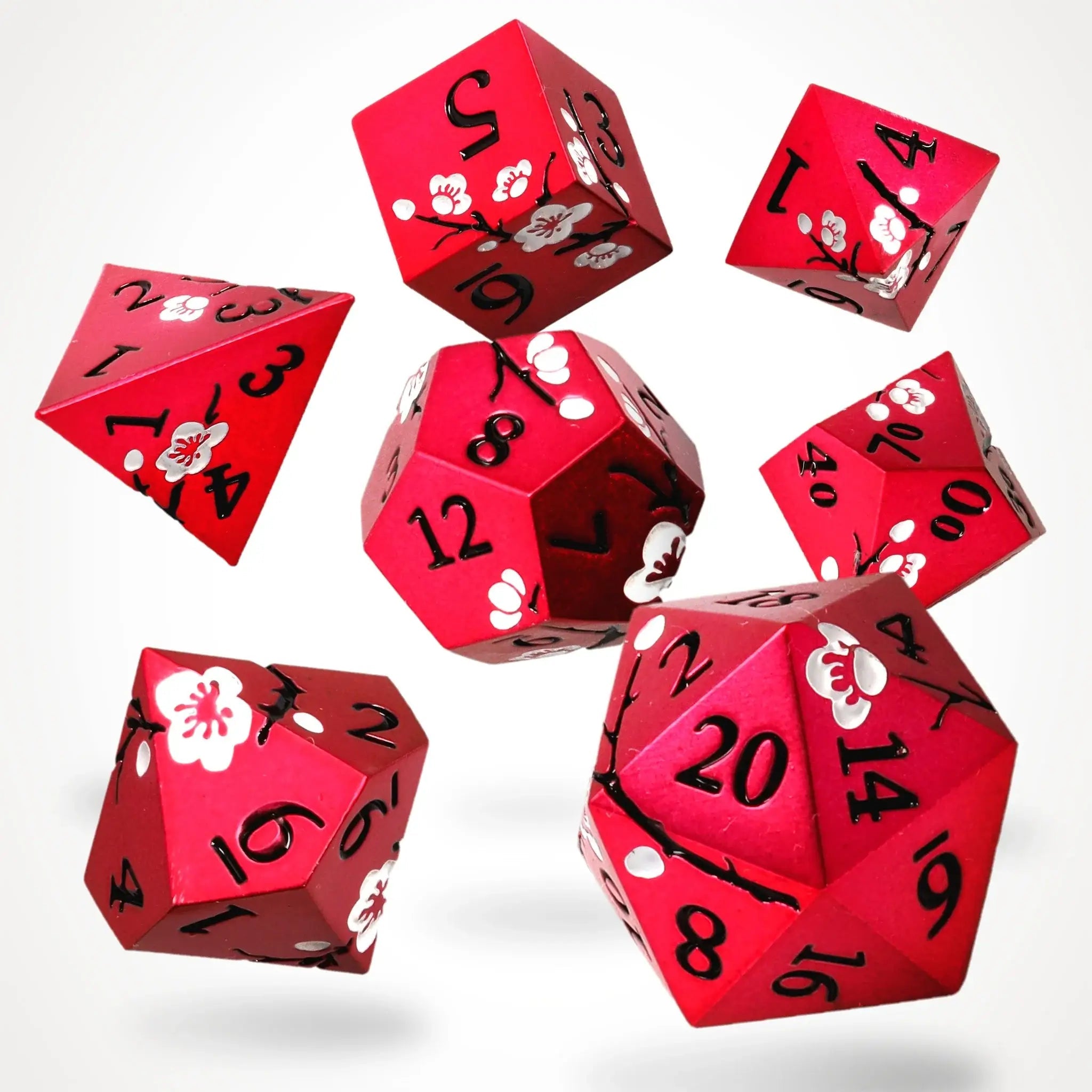
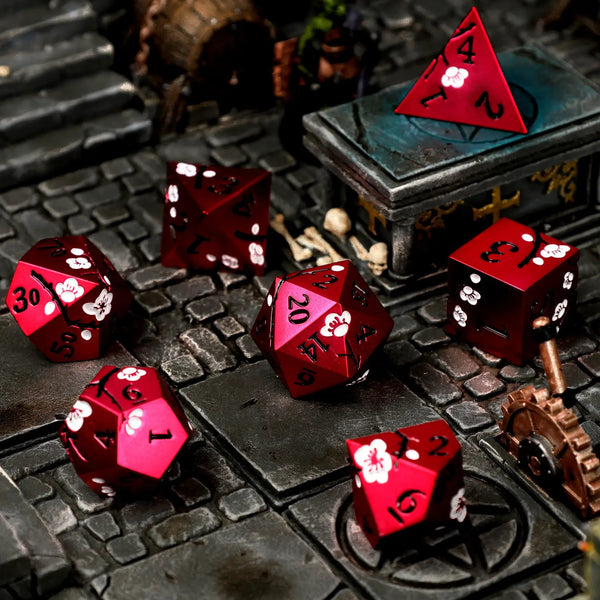
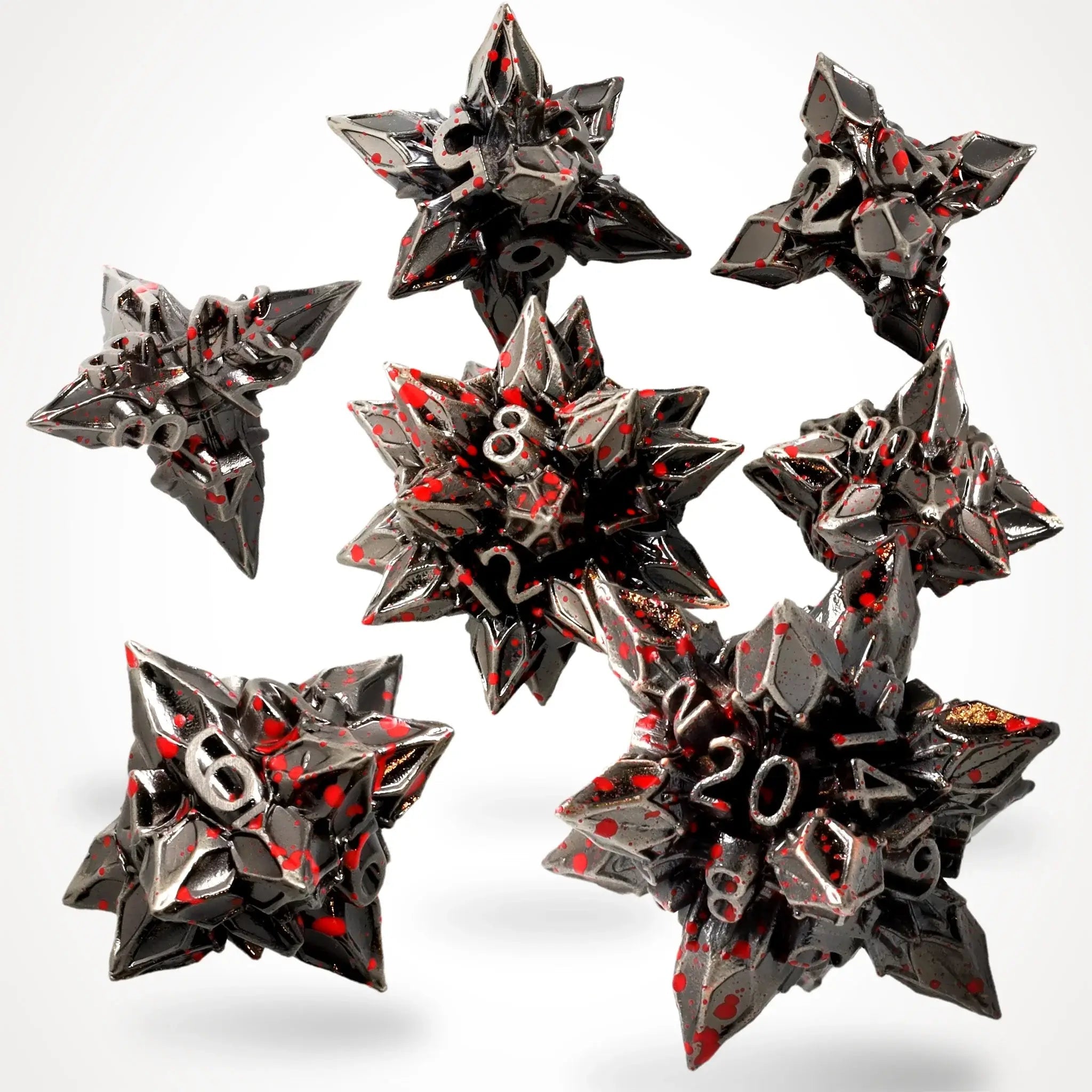
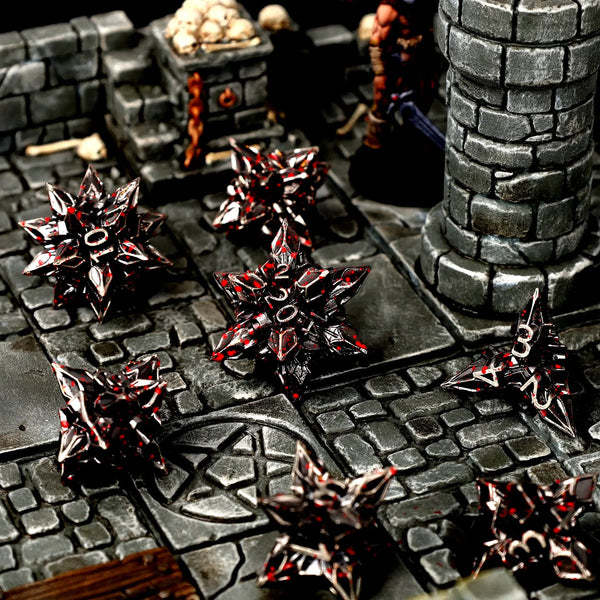
Entry resin sets for impulse buys, sharp edge and liquid core in the middle, a few metal or gemstone sets as the eye catchers that pull people over. The premium sets sell the display even when the mid range sells the volume.
More colourways than lines
Players pick dice by look. Ten colourways of three lines beats three colourways of ten lines.
One proper display
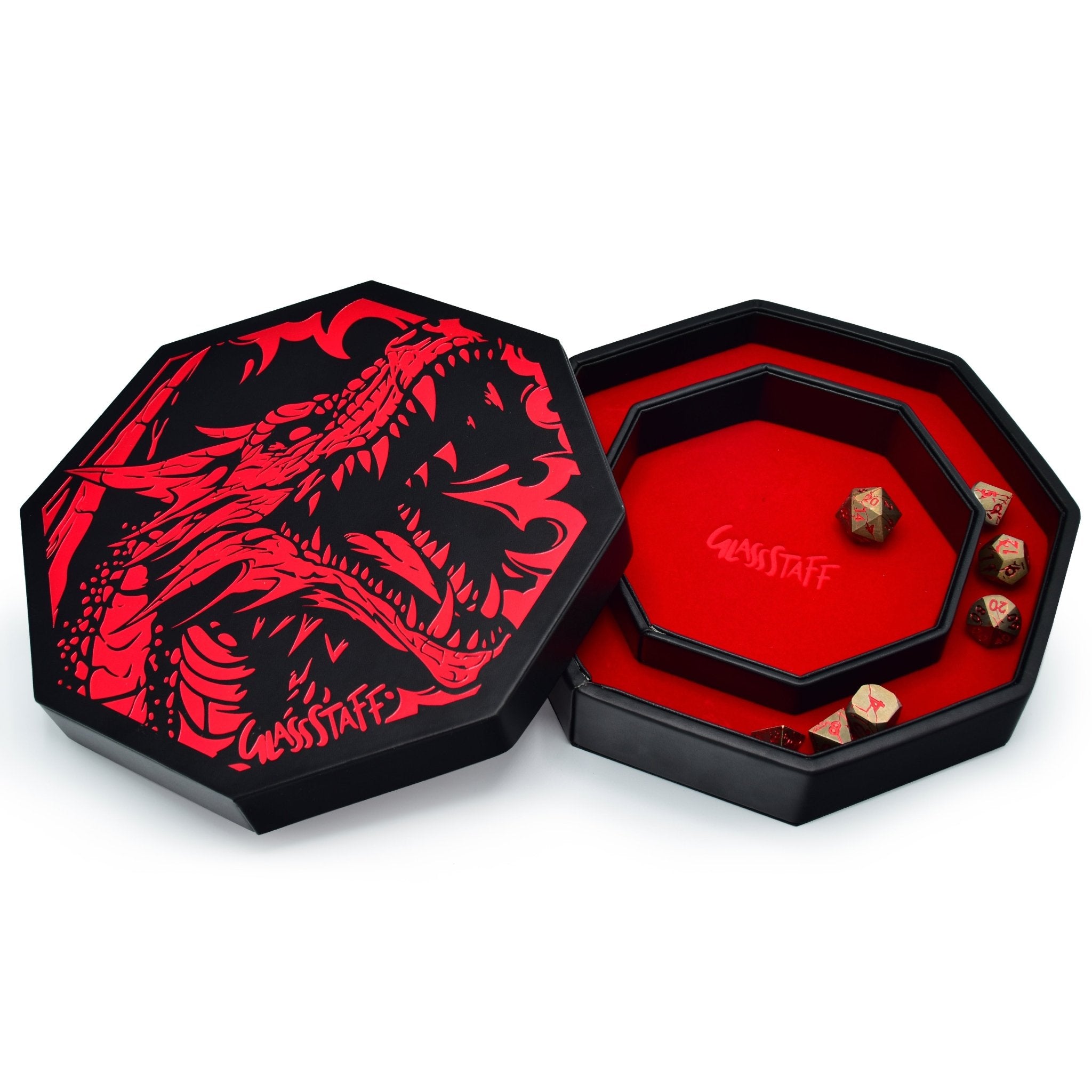
Purpose built counter and shelf displays outsell a glass bowl of loose sets every time. Ours are free.
For scale: our own minimum opening order is EUR or USD 350, which fills a counter display plus a shelf facing with a full spread of materials. That is deliberately low. A first order should be a trial your till can win, not a bet.
Browse by material
In store
The counter does the selling
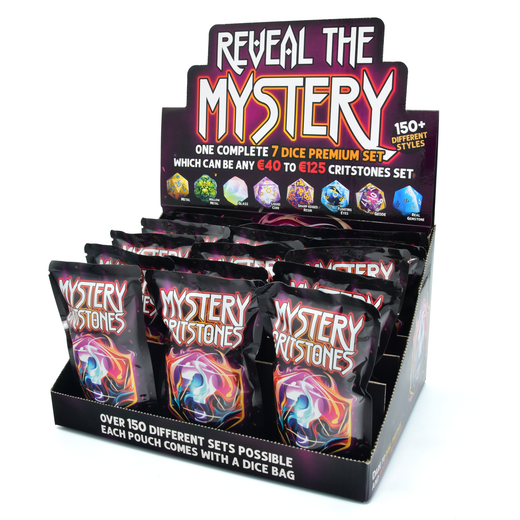
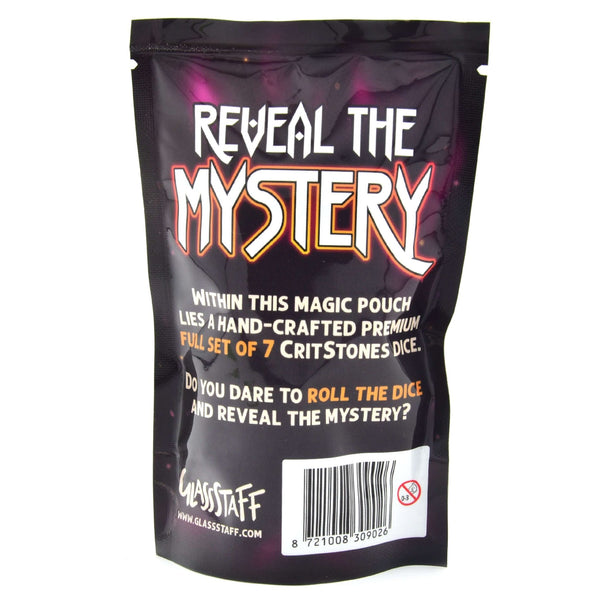
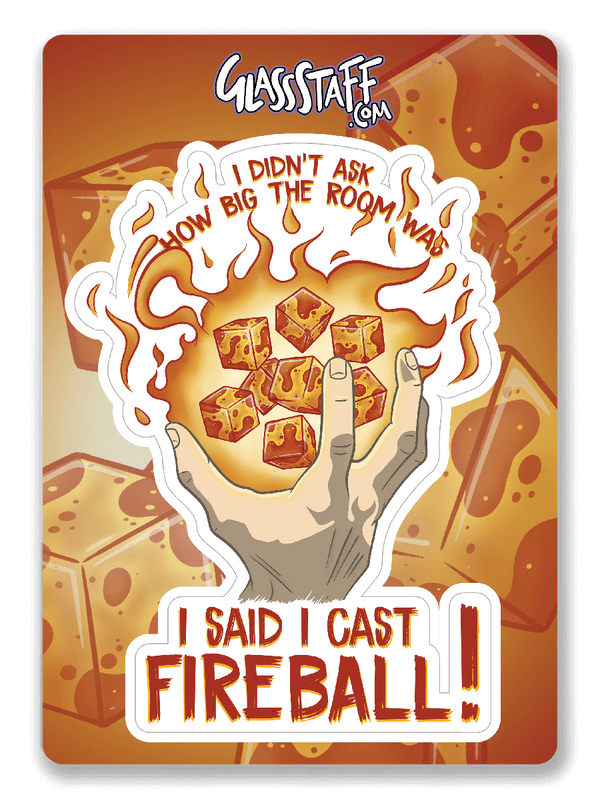
A liquid core d20 next to the till does its own selling, and a booster box display does it at scale: a sealed Mystery CritStones box on the countertop sells blind bags to players who came in for something else entirely. Stores tell us the booster boxes are their fastest dice turn, because the price point is an impulse and the reveal is the fun.
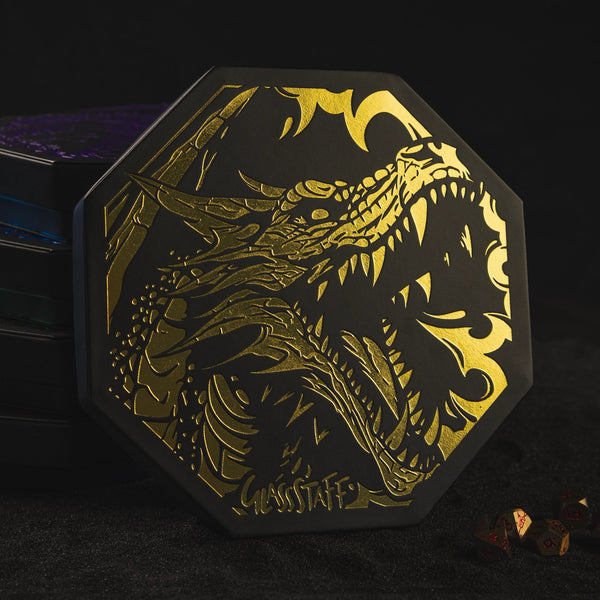
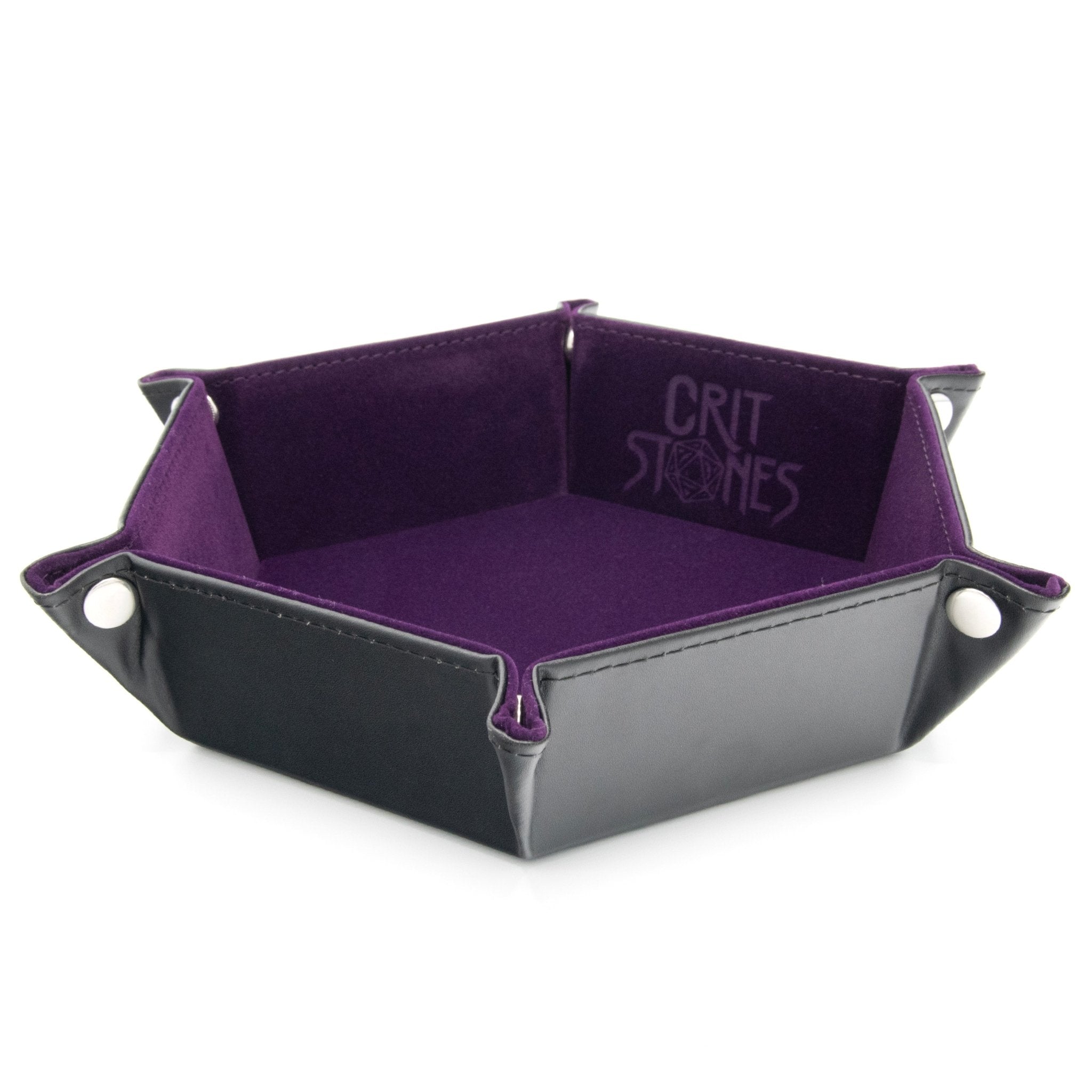
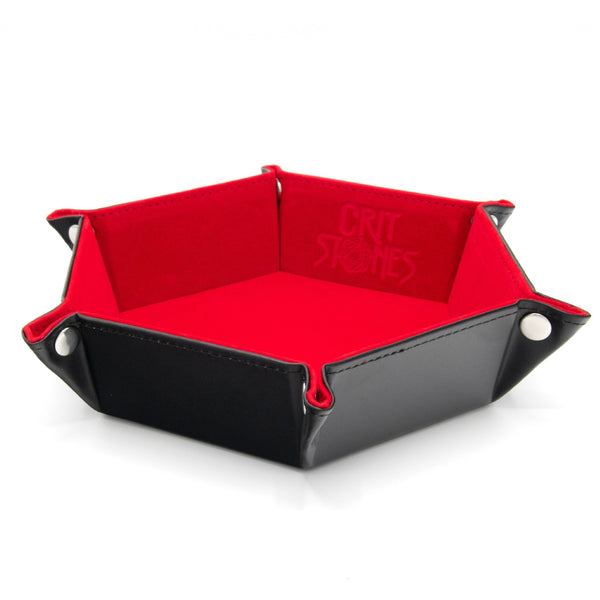
Display material is free, designed in house, and sized for the counter, the shelf and the wall. Custom in store artwork for your shop is part of the service. See the free POS displays.

Proven starters
Four pieces stores start with




Fit and placement
Fit the range to your tables
RPG heavy store
Full seven piece sets first, with spare d20s and matching pairs of d12s for systems that want them.
Wargamers
d6 blocks and themed singles. Wargamers buy dice too; most stores under serve them.
Gift and walk in traffic
Lean into the premium sets. A liquid core d20 by the till is a gift purchase waiting to happen.
Placement, by revenue per position: beside the till, then eye level shelf near the RPG section, then a wall display once the first two turn. The till position does the most work because dice are an impulse and gift item; the customer already has their wallet out.
Keeping it full
Reorder cadence: never let the wall gap
Dice sell steadily, so the failure mode is not overstock, it is gaps. What works:
Reorder the colourways that sold, weekly or biweekly, rather than one big quarterly order. Small frequent restocks keep the display full and your cash free. Use your supplier's free shipping threshold as the batching size for restocks. And if a line is out of stock at the supplier, ask whether backorders get expected dates: a supplier that tracks your backorders and ships them when ready saves you re-checking by hand.
When dice sell hardest: Q4 gifting is the peak, followed by the start of campaign seasons after summer, and any weekend your store runs events. Order your Q4 depth in September and October; dice stock that arrives in December sells in February.










Stock CritStones
A supplier built around everything above
GlassStaff designs CritStones dice in house in the Netherlands and supplies 350+ game stores in 20+ countries from EU and US warehouses. EU stores pay no import duties; US stores ship domestically. Free POS displays designed in house, and a lifetime warranty we handle directly with your customers, so claims never land on your counter.
- EUR/USD 350opening order, free shipping above it
- 30 daysinvoice terms, 60 on request
- 350+ storesin 20+ countries
- 4.95/5from 7,471 verified reviews
A person answers within a working day.